Rainbird builds decision automation for regulated work. We were founded in 2013 by James Duez and Ben Taylor with one requirement in mind: when a system makes a decision that matters, it should be able to show how it got there. On 15 September IDC published its assessment of the vendors in this market, and once again, Rainbird has again emerged as a Major Player in IDC MarketScape: Worldwide Decision Intelligence Platforms 2026 Vendor Assessment (Doc #US54118426, September 2026).
An IDC MarketScape is IDC's way of assessing the vendors in a market. Analysts look at what each vendor can do today and where its strategy is heading, and place it as a Leader, Major Player, Contender or Participant.
IDC calls the category decision intelligence. We call what we do decision automation, and we work on a specific kind of decision: the ones banks, insurers, and tax, audit and professional services firms have to get right and may later have to explain. Whether a payment clears sanctions screening. Whether a customer passes KYC. Whether to lend, what to underwrite, whether to settle a claim. The knowledge behind those decisions is often proprietary and dense. It sits in regulation, in policy documents and in the heads of experienced people, and it changes often.
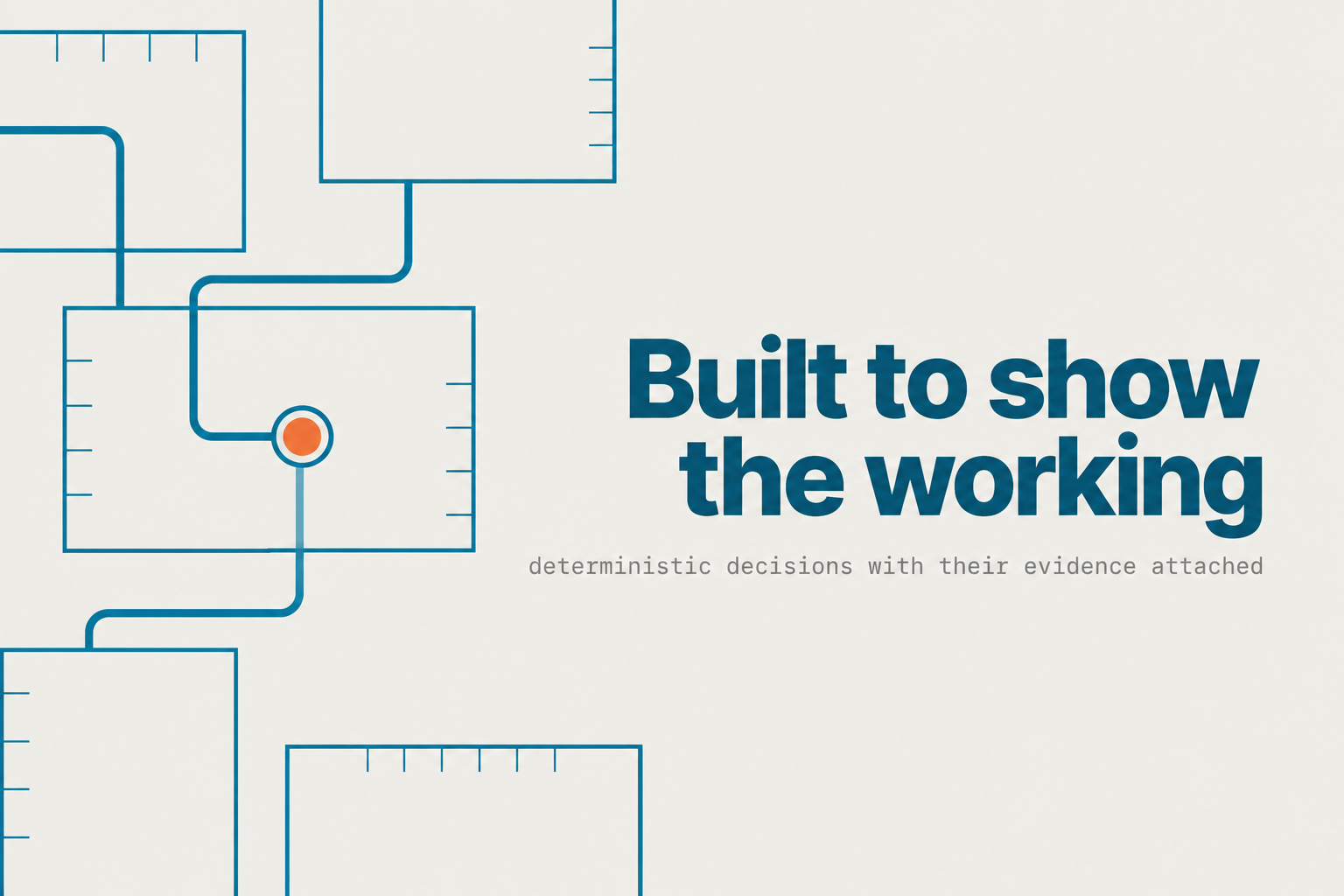
Rainbird turns that knowledge into something a machine can reason with. We call it computable knowledge, and we hold it in a particular type of knowledge graph, one encoded with rules. Each Rainbird graph is a structured map of what the organisation knows and how its policies work, rather than a list of linear rules or data store of PDF policies or vectors. Because knowledge sits apart from the data it runs against, it becomes something the organisation owns and can reuse from one project to the next. When a question comes in, the Rainbird Reasoning Engine works through the graph against the evidence in front of it, weighing that data the way an experienced practitioner would, and gives an answer. Give it the same knowledge and the same inputs and it gives the same answer every time. Every decision comes with an evidence tree, a step-by-step record of how it was reached, which a reviewer, a regulator or an auditor can inspect.
Language models and AI agents fit around this. They are good at the work that surrounds a decision: reading documents, helping people build and explain knowledge graphs, passing work between systems. The decision itself is made symbolically by the Rainbird Reasoning Engine, at the point in the stack we call the Decision Layer: between the agents and workflows that orchestrate work and the systems of record that hold the outcome. No language model is involved in the decision, so there is no generative step in the path and no token cost attached to the decision. An agent can delegate a decision that carries regulatory or operational weight to Rainbird, get a deterministic answer back, then carry on, with the evidence tree there for anyone who needs to understand the outcome.
How much authority Rainbird is given is for each organisation to decide. It can advise, giving a person a reasoned recommendation and the evidence behind it while they keep the final call. It can check a decision that a person or an AI agent has proposed before it takes effect. Or, where an organisation chooses, it can decide within set limits without anyone stepping in. What is common to all Rainbird projects is that institutional knowledge is encoded as a reusable knowledge layer, providing the ability for agents to reason safely over it to make high-quality, policy-precise decisions that are consistent and auditable.
James Duez, our co-founder and CEO: "Since 2017, most of the industry has been heading the other way, chasing what has become language models. We took the view that a system making decisions of consequence should be able to explain its reasoning, and we're pleased to see that position recognised. It also matters more now than it did then. Agents propose actions faster than any human review process can follow, and the organisations deploying them need a decision layer in their architecture that decides consistently and can show a regulator why. That's what Rainbird has spent over a decade building."
To learn more about Rainbird, explore the platform or join the Rainbird Community Edition for free, and build and test your first knowledge graph in an afternoon.